

- Flooring
Can Your Hardwood Floors Be Refinished? A Long Beach Homeowner’s Guide
August 12, 2026
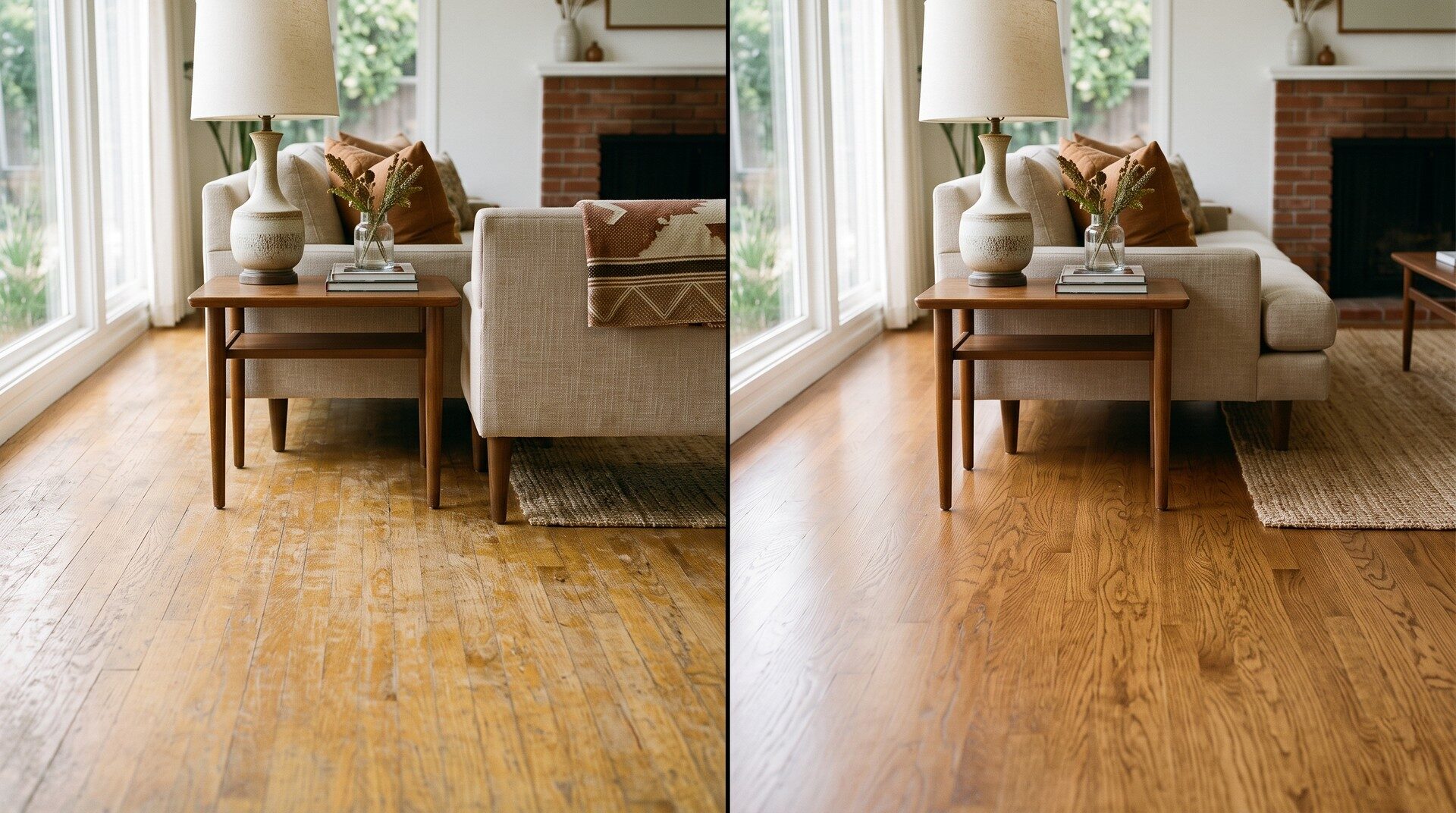
The question comes up in our Long Beach showroom constantly. A homeowner pulls back the carpet in a 1960s Bixby Knolls ranch and finds original oak underneath. Maybe it is scratched. Maybe it is stained. Maybe it has been hidden so long they do not even know what species it is. The first thing they want to know is whether it can be saved.
Sometimes the answer is yes — and the transformation is dramatic enough to stop visitors in their tracks. Sometimes the answer is no, and we owe them an honest explanation rather than a bill for work that will not hold up. After years of doing refinishing assessments in Long Beach homes, we have developed a clear set of checkpoints we walk every floor through before we recommend anything. Here is how to think through it yourself before you call us.
Key Takeaways
- Many Long Beach homes built between the 1940s and 1970s have original oak hardwood that is still refinishable — even after decades under carpet.
- Solid 3/4-inch hardwood can typically be refinished 7-10 times over its life; a floor installed in the 1960s that has never been sanded is an excellent candidate.
- Engineered hardwood is only refinishable if the veneer is thick enough — the NWFA standard requires at least 3/32 inch (approximately 2.4mm) of remaining veneer above the tongue-and-groove.
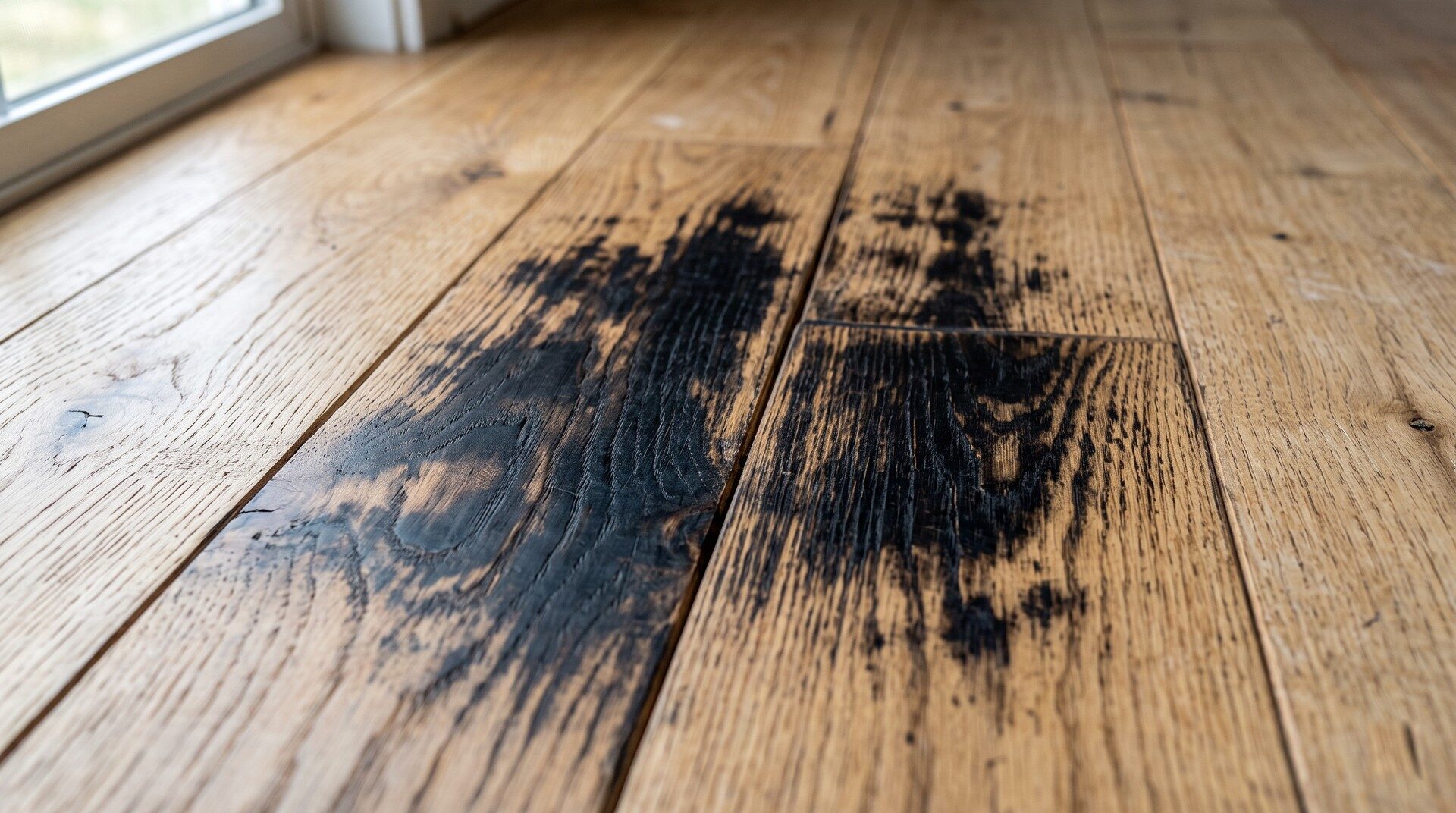
- Black staining, severe buckling, and nails showing through the surface are the clearest signals a floor needs replacement rather than refinishing.
- Family Floors offers free in-home refinishing assessments in Long Beach — we tell you honestly what the floor needs before we quote anything. Call (562) 506-0505.
Why So Many Long Beach Homes Have Refinishable Hardwood
Long Beach’s postwar housing boom produced a lot of homes fast, and many of them got solid oak hardwood as the standard floor. The El Dorado Park Estates, Bixby Knolls, and Wrigley district neighborhoods contain a high proportion of 1950s-1970s construction where 3/4-inch solid oak was the norm in living rooms, dining rooms, and hallways.
Then came the 1980s carpet era. Many of those original floors got covered and forgotten. What that means today is that Long Beach has an unusually high number of homes where solid hardwood is sitting under the carpet in good condition — protected from traffic by the very material that hid it. When homeowners pull that carpet, they often find floors with surface oxidation and color change from age, but structurally intact: solid oak planks with multiple refinishing cycles still ahead.
Solid 3/4-inch hardwood starts at 19mm thick. Each refinishing cycle removes roughly 1-2mm of material depending on equipment and technique. A floor that has never been sanded has the equivalent of 7-10 cycles remaining before it reaches the tongue-and-groove threshold where sanding is no longer safe. A 1960s floor that was refinished once in 1985 and once in 2005 still has several cycles left.
That math is one of the reasons refinishing is worth exploring before you assume the floor has to come out.
What Are the Signs a Hardwood Floor Can Be Refinished?
Before calling anyone, walk the floor and check these yourself.
Surface scratches and dullness.
Light scratches that have not penetrated through the finish layer, a dull or yellowed appearance, and minor surface discoloration from age are all refinishing candidates. The finish is worn; the wood underneath is fine. A full sand-and-refinish removes the finish entirely, exposes fresh wood, and accepts whatever stain and topcoat you choose. We get calls from homeowners convinced their floors are ruined by light scratching who end up with results that look better than the floor did when new.
Shallow pet scratches.
Dog nail scratches that travel across the finish but have not deeply gouged the wood are addressable through refinishing. Look at the scratch under a light at an angle — if the wood grain beneath still looks continuous, the scratch is in the finish layer, not the wood itself. Refinishable.
Discoloration from age or sunlight.
Floors that have faded unevenly, developed a patina from decades of use, or show color variation from where area rugs once protected them are excellent candidates. Sanding takes the floor back to raw wood; a new stain applies uniformly.
Cupping that has fully reversed.
Cupping — where planks bow upward at the edges — is caused by moisture imbalance. In Long Beach’s marine layer climate, seasonal cupping sometimes occurs in poorly ventilated homes. Once the moisture source is corrected, if the cupping has resolved and planks are flat again, the floor is likely refinishable. If the cups remain pronounced after the source is addressed, a professional assessment determines whether the wood has set permanently.
Not sure which category your floor falls into? Call us at (562) 506-0505 — a free in-home assessment takes the guesswork out of it entirely.
“We had a very good experience and I would recommend Family Floors. Installers did a very good job and were very quick.” — J.S., Long Beach
What Are the Signs a Floor Needs Replacement Instead?
Honest refinishing assessments include the cases where refinishing is not the right answer. These are the signals that push toward replacement.
Black staining.
A dark black stain, particularly around pet areas or where water has repeatedly puddled, is not surface damage — it is mineral oxidation that has penetrated the wood fiber itself. As the NWFA’s technical guidance confirms, urine’s mineral salts react with the tannins in oak to produce a black discoloration that goes deep into the grain and cannot be sanded out. The affected boards need to be replaced. A refinish can be done around or after that board replacement if the rest of the floor is structurally sound.
Buckling or structural movement.
Boards lifting off the subfloor, a soft or springy feel underfoot, or persistent squeaking that suggests fastener failure are all signals that the problem is below the wood, not in it. Sanding a structurally compromised floor produces a beautiful surface that continues to fail. The subfloor needs attention first.
The nails are showing.
On solid hardwood, if the tops of the nail fasteners are visible through the face of the plank, the floor has been sanded to its structural limit. Any further sanding damages the fasteners and the subfloor beneath them. This floor needs replacement.
Engineered veneer too thin to sand.
If the floor is engineered hardwood, the refinishing question is different from solid hardwood. The NWFA standard requires at least 3/32 inch of remaining veneer above the tongue-and-groove for safe refinishing. Many budget engineered products have veneers below 2mm at the start; if the floor has been sanded before or shows significant wear, that threshold may already be breached. A professional with the right gauge can measure this during an assessment — you cannot determine it by looking at the face of the plank.
“Every floor assessment we do in a Long Beach home starts with the same question: is the structure sound?” says Jay Glatman, owner of Family Floors. “If the subfloor is solid and the wood is thick enough, we can do something remarkable with refinishing. If the structure is compromised, we tell people that upfront rather than let them pay for a refinish that will not last.”
Solid Hardwood vs. Engineered Hardwood: Does It Matter for Refinishing?
It matters a great deal, and the distinction catches many homeowners off guard.
Solid hardwood — the 3/4-inch oak and hickory standard in Long Beach postwar construction — can be refinished many times because the entire plank thickness is usable wood. As long as the fasteners are not exposed and the structure is sound, sanding back to fresh wood and refinishing from scratch is entirely viable.
Engineered hardwood looks identical from above, but it is a plywood or composite core with a real wood veneer bonded on top. Veneer thickness varies dramatically by product. A premium engineered floor might have a 4-6mm veneer allowing two or three refinishing cycles. A budget product might have a 1mm rotary-cut veneer that cannot be safely sanded at all. You cannot tell the difference by looking at the face of the plank — you need to examine the edge profile, or have a professional measure it. If you do not know whether your floor is solid or engineered, that is the first thing a Family Floors assessment establishes.
“The guys did a great job. Answered questions and were very professional.” — Loretta A., Long Beach
What Does the Refinishing Process Actually Look Like?
Homeowners who have never had floors refinished often imagine a disruptive, multi-week dust event. The reality with modern dustless sanding equipment is considerably more manageable.
Family Floors uses a dustless sanding system that captures the vast majority of wood dust at the source. No sanding process is completely dust-free — “dustless” in the industry means substantially reduced rather than zero — but the difference compared to traditional drum sanding is significant for occupied homes or households with allergy concerns. Our own service page is clear about this: we take every precaution to minimize dust, but we will not oversell the result.
For floors where the finish is worn but the wood itself is undamaged — no visible dents, no cupping, no color-change desire — a screen-and-recoat is often the right choice rather than a full sand-and-refinish. Screening lightly abrades the existing finish and applies a fresh topcoat without removing wood. It is faster, less disruptive, and extends the floor’s life without consuming a full sanding cycle. We assess which approach fits your floor during the free estimate visit.
A full sand-and-refinish for a typical Long Beach living and dining room takes one to two days from sanding through final finish coats. We can match new boards to existing floors if partial replacement is needed, finish stairs and treads in the same pass, and apply custom stain colors matched to your trim or adjacent flooring.
How to Book a Refinishing Assessment in Long Beach
Call our Long Beach showroom at (562) 506-0505 or visit us at 6447 E Spring St. We schedule in-home assessments throughout Long Beach — El Dorado Park Estates, Bixby Knolls, Wrigley, Naples, Belmont Shore, and surrounding neighborhoods. We come prepared to give you a clear-eyed read on what your floor needs. If refinishing is the right answer, we schedule the work. If it is not, we tell you that too, and show you replacement options from our Long Beach showroom.
Frequently Asked Questions
How do I know if my Long Beach home has original hardwood under the carpet?
Pull back a floor register cover or a corner of carpet in a closet — you can often see the floor material beneath without removing the carpet. Original hardwood from Long Beach’s postwar construction era is typically 3/4-inch solid oak. If the exposed edge shows a single solid piece of wood rather than layers, that is a strong signal you have refinishable hardwood.
Can engineered hardwood floors be refinished?
Some can; many cannot. The determining factor is veneer thickness. The NWFA standard is at least 3/32 inch (approximately 2.4mm) of remaining real wood above the tongue-and-groove. Budget engineered products often start below this threshold. A professional assessment is the only reliable way to know — you cannot determine veneer thickness by looking at the face of the plank.
What causes black staining in hardwood floors, and can it be refinished away?
Black staining in hardwood is most commonly caused by pet urine — the mineral salts oxidize with the tannins in oak and produce a black discoloration that penetrates deep into the wood fiber. This cannot be sanded out. Affected boards need to be replaced. A refinish can be done around or after board replacement if the rest of the floor is structurally sound.
How many times can a hardwood floor be refinished before replacement?
Solid 3/4-inch hardwood can typically be refinished 7-10 times before reaching the fastener threshold. Each cycle removes roughly 1-2mm depending on technique and equipment. A 1960s Long Beach floor that has been sanded once or twice likely has 4-6 refinishing cycles remaining. Engineered hardwood has fewer cycles available depending on veneer thickness.
What is the difference between a full refinish and a screen-and-recoat?
A full sand-and-refinish removes all existing finish down to bare wood, allows stain color changes, and addresses dents and deep wear patterns. A screen-and-recoat lightly abrades the existing finish without removing wood, then applies a fresh topcoat — suitable when the finish is worn but the wood itself is in good condition. Screen-and-recoat is faster and less disruptive, and preserves a refinishing cycle for later. Family Floors assesses which approach fits your floor during the free estimate visit.
Does Family Floors do in-home hardwood refinishing assessments in Long Beach?
Yes. Call our Long Beach showroom at (562) 506-0505 or visit us at 6447 E Spring St to schedule a free in-home assessment. We assess the floor, tell you honestly whether refinishing or replacement makes more sense, and provide an estimate if refinishing is viable — no commitment, no pressure.
- Hardwood
You Might Also Like
-

- Flooring
September 15, 2026
Custom Stair Runners in Long Beach: What to Expect and How to Choose
-

- Flooring
August 26, 2026
LVP vs. Laminate Flooring in Orange County: Which One Actually Lasts?
-

- Flooring
July 20, 2026
Best Waterproof Flooring for Huntington Beach Homes with Pets